
Buying property in Ghana while living abroad comes with a very specific kind of anxiety.
You may have the money ready. You may know the area you want. You may even have a developer, agent, or family member sending you updates. But until you can properly see the property for yourself, there is always that uncomfortable gap between interest and confidence.
For many Ghanaians in the diaspora, that gap is filled with WhatsApp videos, rushed phone calls, carefully selected photos, and the familiar phrase: “Don’t worry, it’s a good place.”
But property is too important for “don’t worry.”
Whether you are buying a home for your family, investing in land, securing an apartment, or planning a future return to Ghana, you need a better way to inspect what you are paying for. That is where virtual property tours and digital twins are becoming a serious part of the real estate buying process.
With InfinitiView, DOBIISON helps developers, agencies, and property owners in Ghana present their properties in a way that remote buyers can actually explore. Not just watch. Not just admire. Explore.
Why Property Buying from Abroad Feels Risky
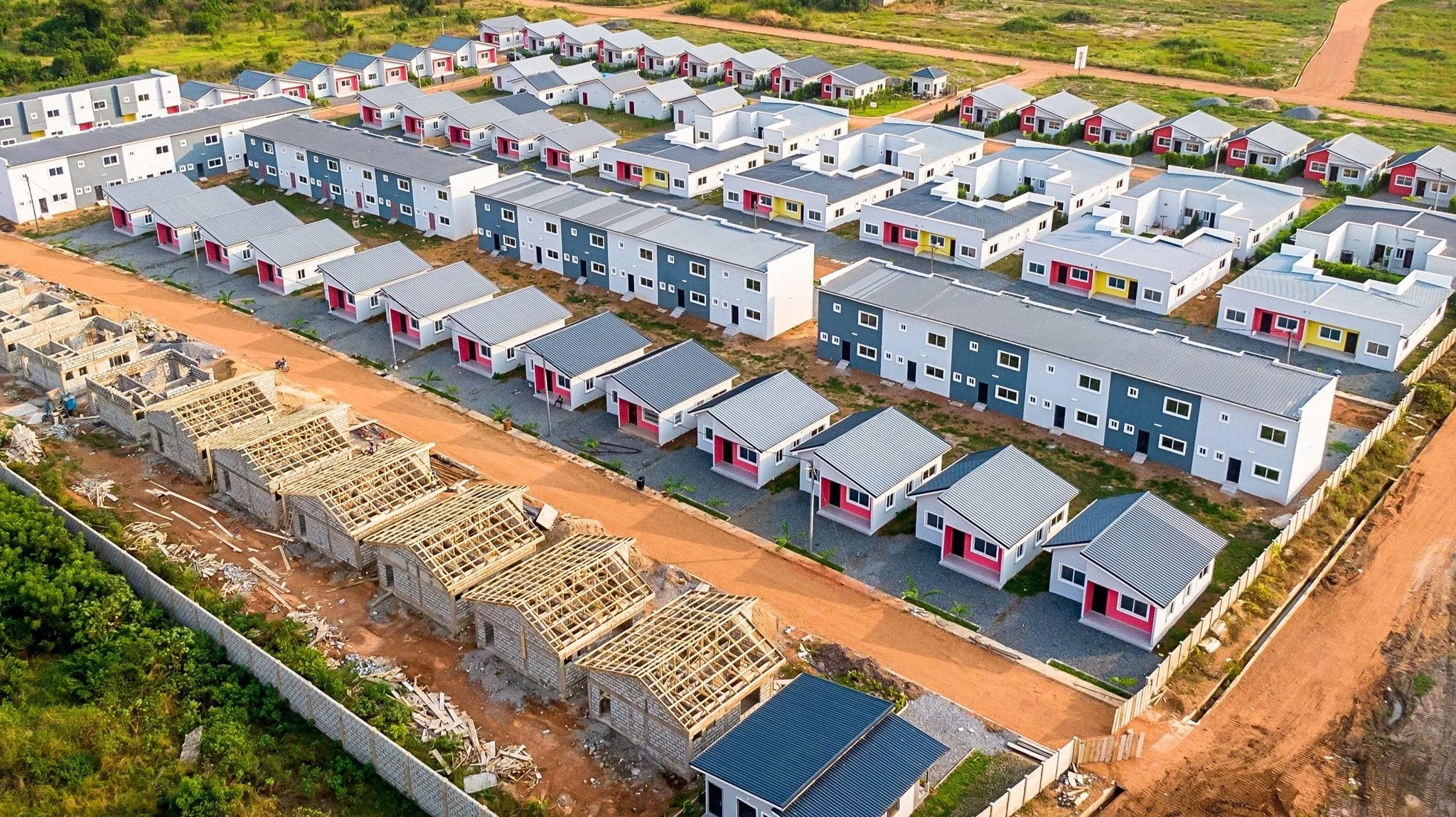
The biggest issue is not always distance. It is the lack of clear, trustworthy visibility.
A buyer in London may be considering a development in Appolonia. Someone in New Jersey may be looking at homes around East Legon Hills or Oyibi. A family in Hamburg may be comparing gated communities, townhouses, apartments, or land options across Greater Accra.
But what do they usually receive?
A few exterior photos.
A short video from an agent’s phone.
A brochure with polished renders.
A location pin.
Maybe a voice note explaining the payment plan.
That is not enough for a serious buyer.
You want to see the entrance. You want to understand the road network. You want to know how the rooms connect. You want to inspect the compound, the finishes, the surrounding area, the estate layout, and the small details that photos usually hide.
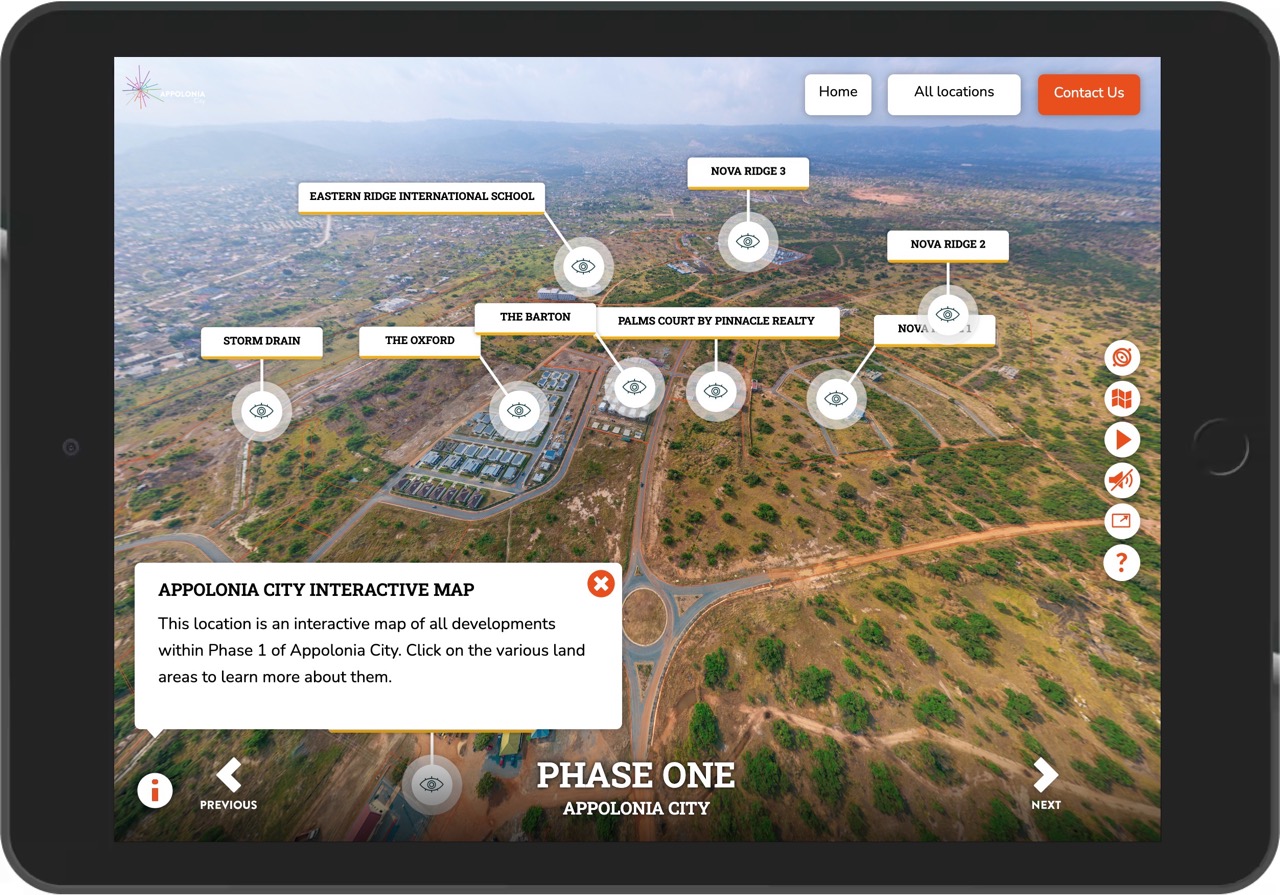
This is even more important when buying off-plan or buying into a larger estate development. A project like Appolonia City, for example, is not just about one house or one plot. It is about the wider environment, the neighbourhood structure, the estate roads, the industrial park, the residential areas, and the long-term plan of the community. A flat photo cannot carry all that context. A proper virtual experience can.
A Virtual Tour Gives the Buyer Control
The difference between a normal video and a virtual tour is control.
A video shows you what the person behind the camera wants you to see, in the order they choose to show it. If they move too fast, skip a corner, avoid a view, or focus only on the best angle, you have to accept what you are given.
A virtual tour lets you slow down.
You can look around the room. You can return to a space. You can check the ceiling, the floor, the windows, the kitchen, the bathroom, the compound, and the approach to the building. You can send the link to your spouse, parents, siblings, lawyer, or trusted person in Ghana and everyone can look at the same thing.
That shared view matters.
For a buyer abroad, a virtual tour is not just a nice marketing feature. It becomes part of the inspection process.
Take Belton Residences by Thorpe Bedu. A buyer does not have to rely only on a flyer or a phone-shot walkthrough. They can open the virtual tour, review the property experience, and then decide whether it deserves a deeper conversation with the seller or developer.
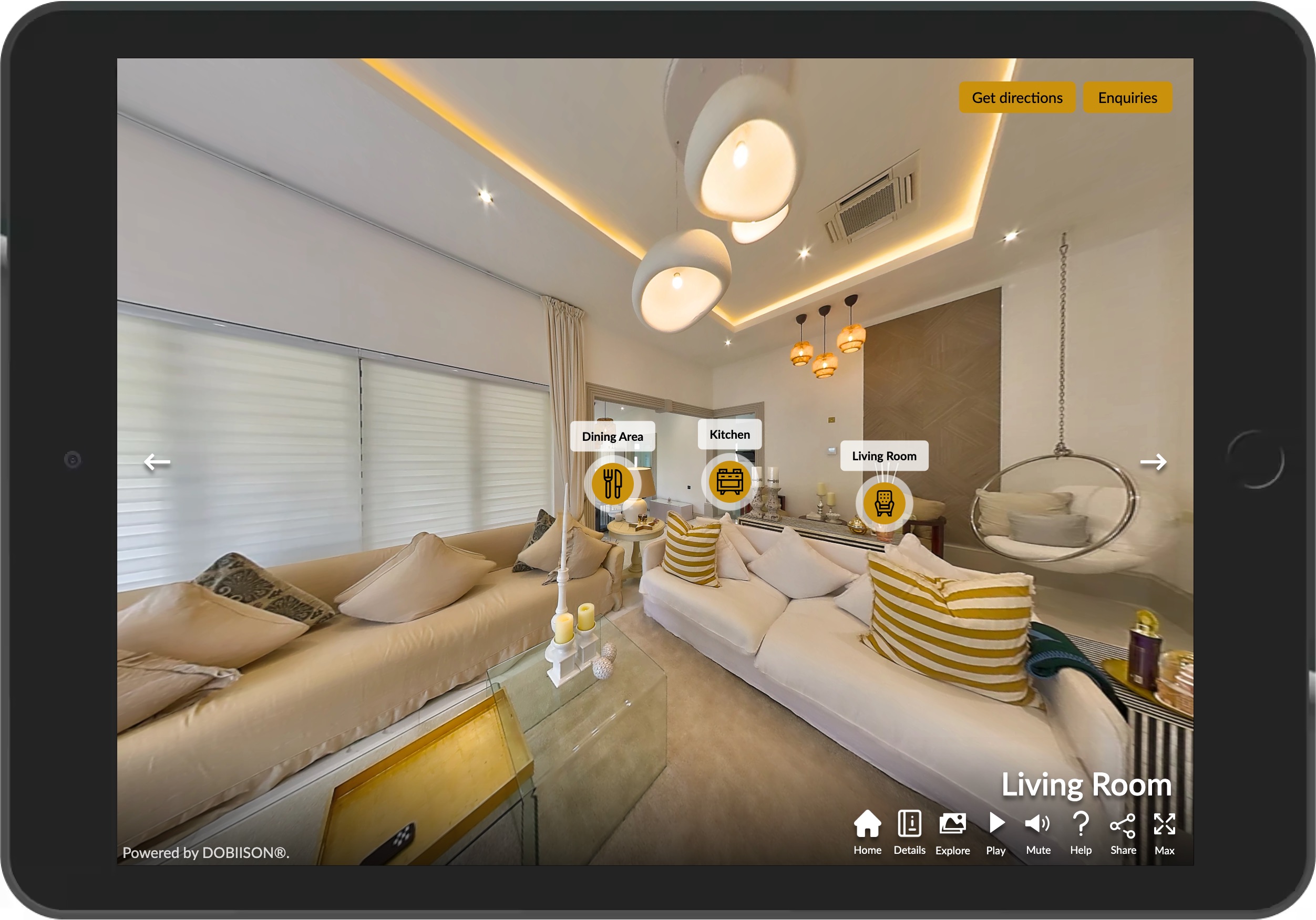
The same applies to developments like Luxe Maison by ILLAS Realty, where the buyer can spend time moving through the space before calling anyone.
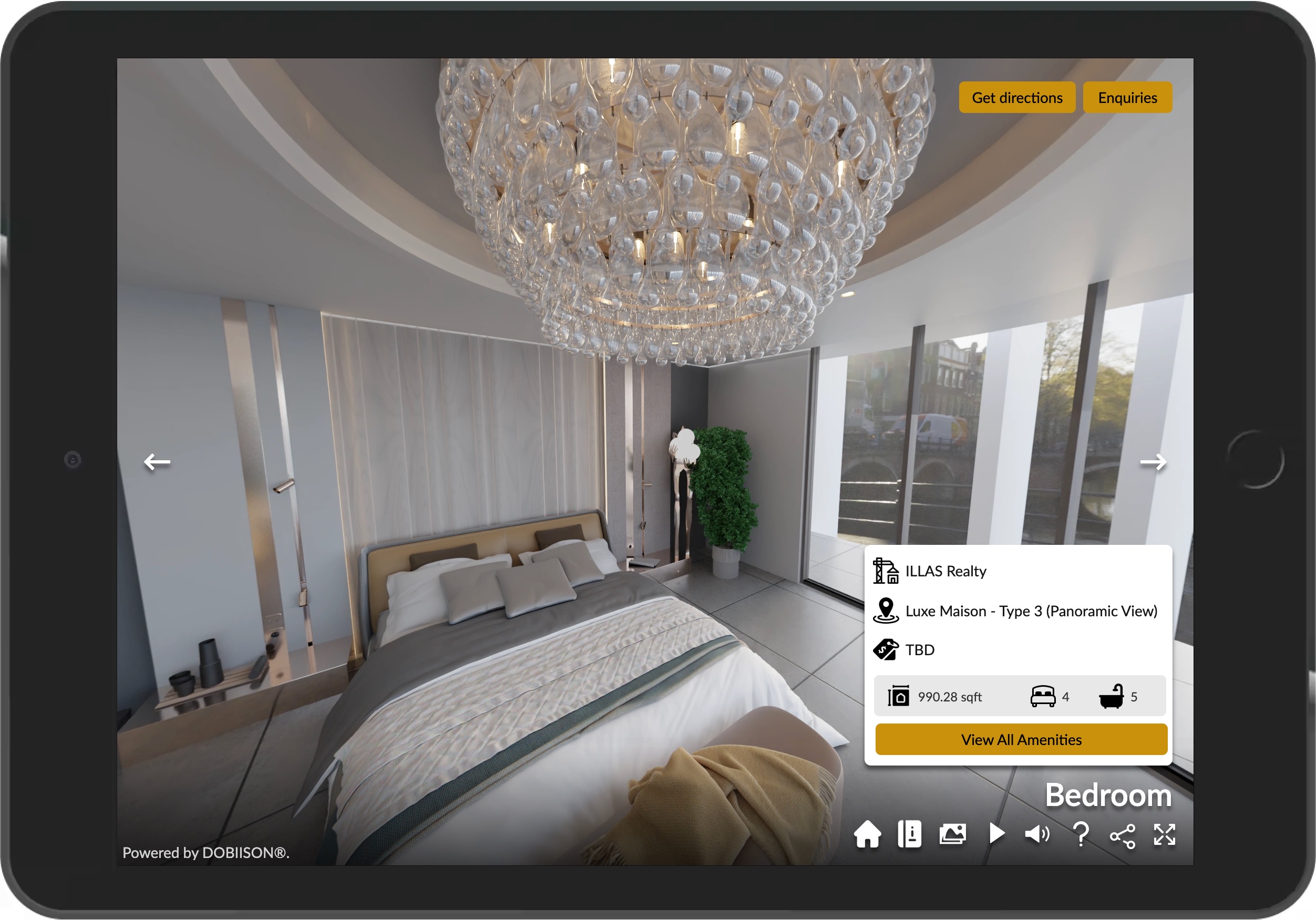
That is a very different buying experience from waiting for someone to “send more pictures later.”
It Helps You Shortlist Before You Send Anyone to Site
Many diaspora buyers depend on relatives or friends in Ghana to inspect properties for them. That is understandable. But it can also be unfair to both sides.
Your cousin may not know what to check.
Your brother may be busy.
Your parents may not understand the exact kind of investment you are looking for.
Your friend may visit the site but forget to capture the details you care about.
A virtual tour helps you do the first round of inspection yourself.
Before sending anyone across town, you can open the property link and decide whether it is worth a physical visit. This saves time. It also makes the person visiting on your behalf more useful, because they are no longer going in blindly.
For example, a buyer looking at Springfield Estate by Swami India can first review the virtual tour, understand the layout, and then ask their representative in Ghana to confirm specific details on site.
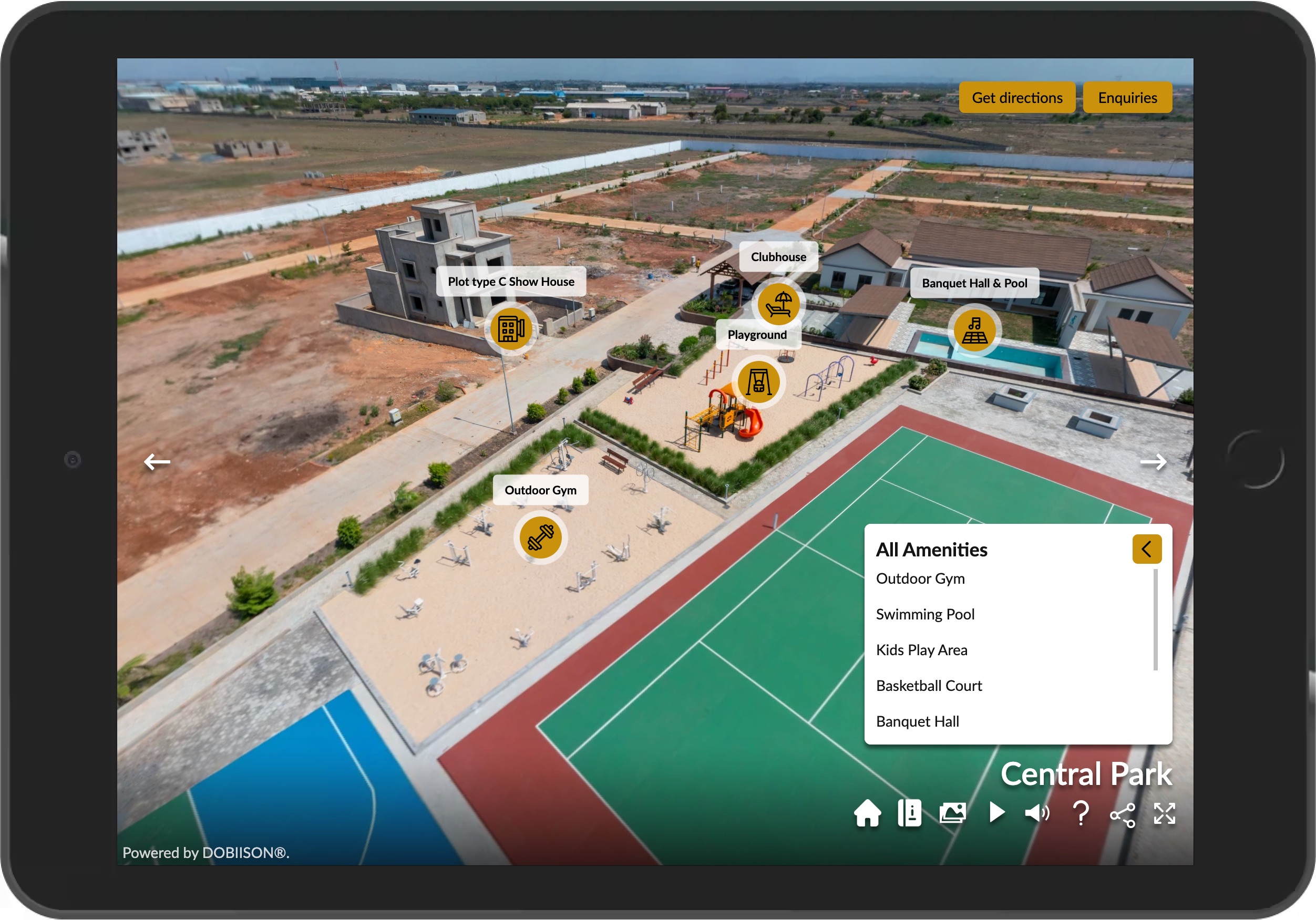
That is far better than sending someone to “go and see if the place is nice.”
A remote buyer can explore the property first, then use the physical inspection to confirm what matters: road access, current condition, finishing, neighbourhood activity, documentation, and the exact unit being discussed.
It Makes Comparisons Easier
One of the hardest parts of buying from abroad is comparing properties properly.
Every agent says their location is good. Every brochure makes the development look attractive. Every project sounds promising when the sales team is doing its job.
But when you have virtual tours, you can compare with a clearer head.
For land buyers, this can be even more important. Land is not only about the plot. It is about access, location, surroundings, future growth, and whether the area feels right for the purpose you have in mind.
That is why virtual views of places like Appolonia City and Dawa Industrial Zone are useful for buyers who cannot immediately travel to Ghana.
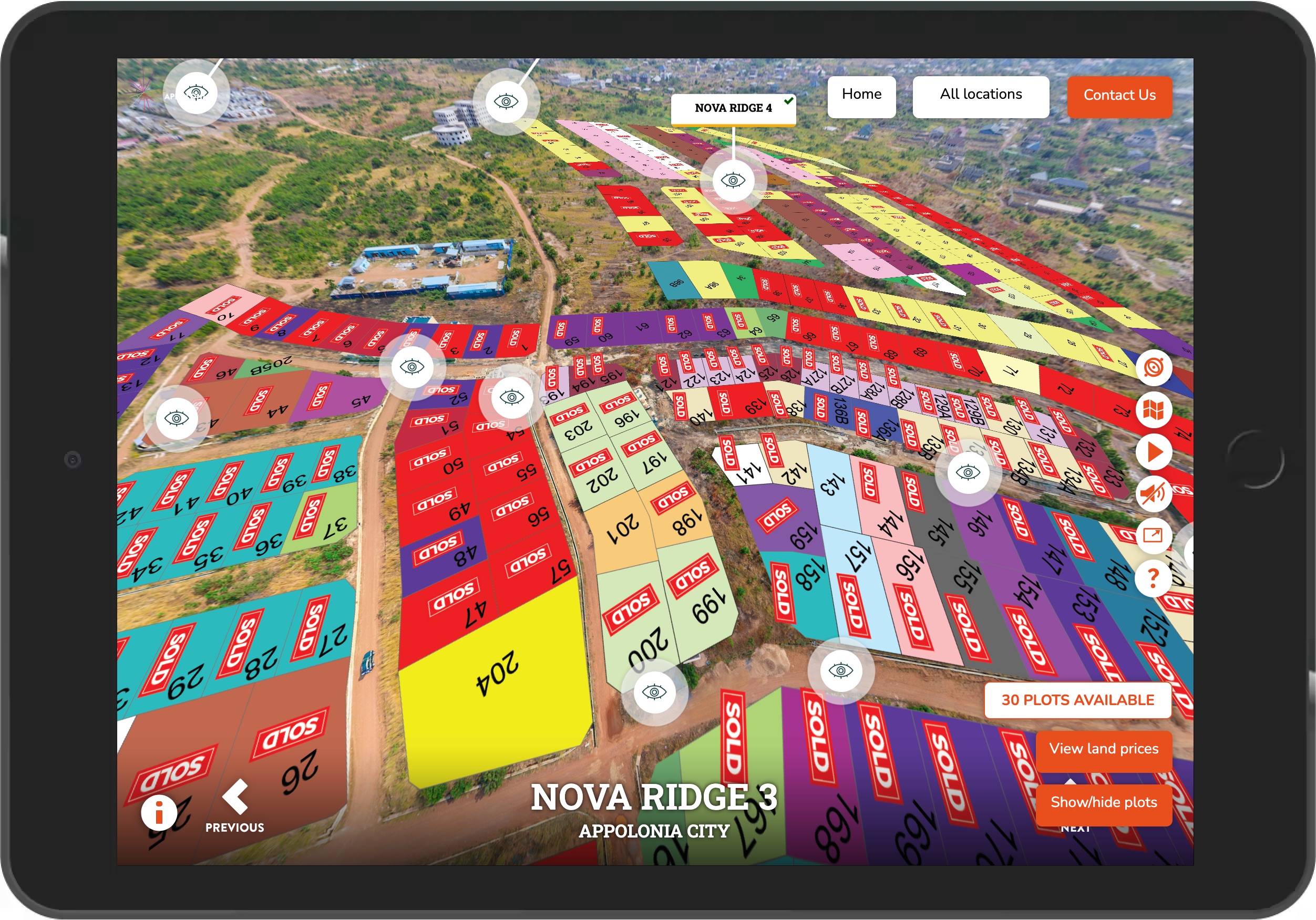
You are not making the final decision from the tour alone. But you are no longer comparing blind.
It Helps Serious Buyers Ask Better Questions
A virtual tour does not replace legal due diligence. It does not replace a land search, a lawyer, a site visit, title verification, contract review, or direct confirmation from the developer.
But it helps you ask sharper questions.
After viewing a property virtually, you can ask:
Is the unit in the tour the same unit being sold?
When was the tour captured?
Has the property changed since then?
Is the price for the exact finish shown?
What parts of the development are completed?
Which amenities are ready now, and which are planned?
Can my representative inspect this same unit in person?
Is this virtual tour linked from the developer’s official website?
These are better questions than “Please send me more pictures.”
When a developer has taken the trouble to present a property properly, the sales conversation becomes more serious. Buyers are better informed. Agents waste less time. Developers deal with people who have already seen enough to know whether they are interested.
That is one reason InfinitiView is useful for projects like ILDC, Octoglow, and Dawa Industrial Zone, where the buyer or investor may need more than a basic listing page to understand what is being offered.
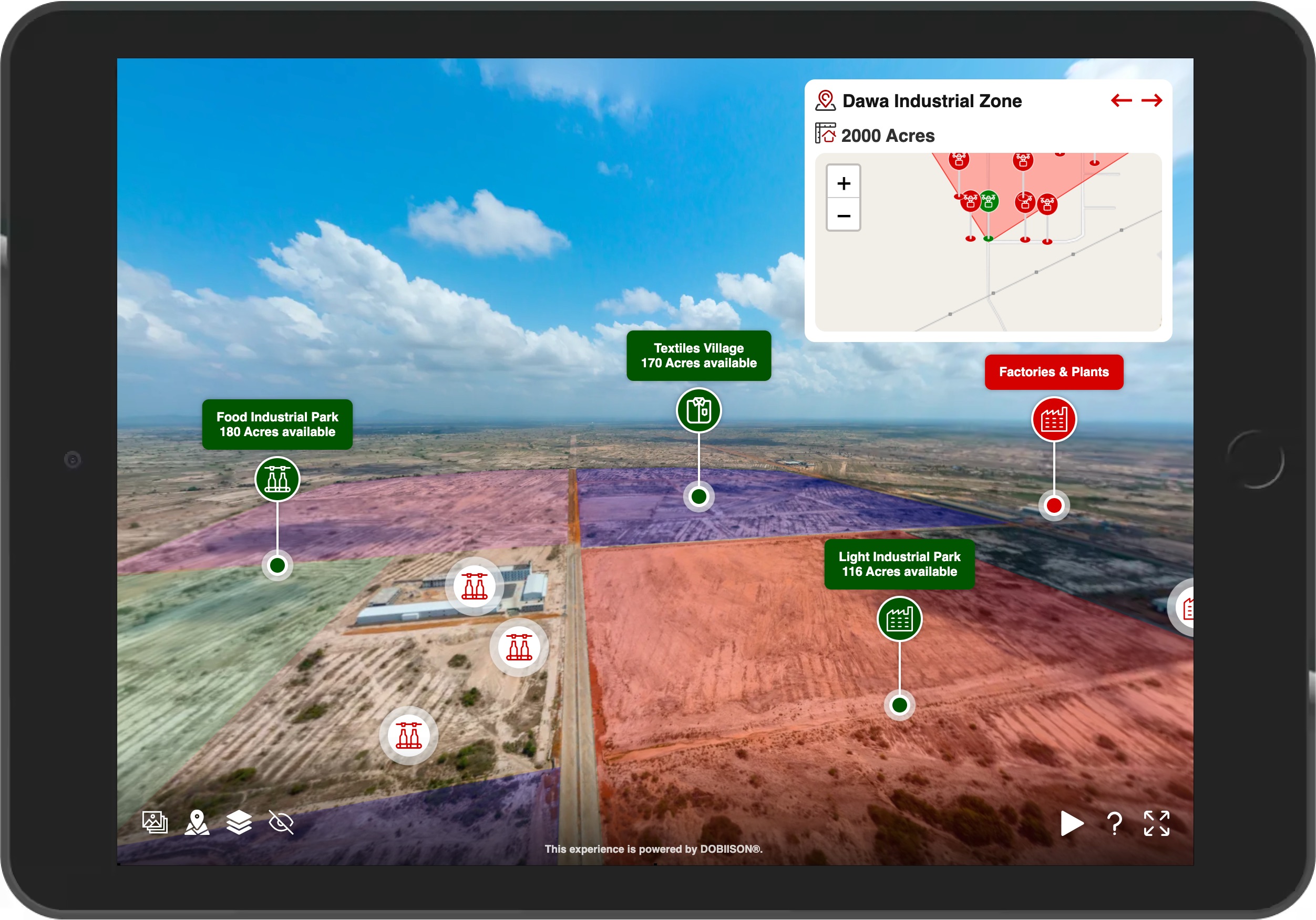
For diaspora buyers, especially those looking at property as a long-term asset, that added clarity can make the whole process feel less chaotic.
It Reduces the Pressure to Travel Too Early
There are times when travelling to Ghana for inspection makes sense. But not every interested buyer can get on a plane just to check three or four properties.
Flights cost money. Time off work is limited. Family schedules are tight. And even when you arrive, you may spend days driving around to places that looked better online than they do in person.
A virtual tour helps you narrow the list before you travel.
You can review several options from abroad, remove the weak ones, then plan your visit around the properties that are genuinely worth seeing.
This does not remove the need to inspect. It makes inspection more efficient.
It Builds Trust Before Money Enters the Conversation
For diaspora buyers, trust is everything.
Too many people have heard stories of money sent for one thing and used for another. Too many buyers have seen listings that look different from reality. Too many families have gone through confusion because the person abroad and the person on the ground were not looking at the same information.
A good virtual tour creates a common reference point.
The buyer, the seller, the agent, the family representative, and the lawyer can all look at the same property experience. That does not solve every problem, but it removes some of the uncertainty that often surrounds remote property buying.
For developers, this is also a strong signal. When a developer is willing to show the space properly, it tells the buyer: we understand that you need to see before you trust.
That is especially important for diaspora buyers considering off-plan or newly completed properties. They are not only buying walls and tiles. They are buying into a promise. And promises need proof.
What Should You Look for During a Virtual Property Inspection?
Do not rush through the tour.
Start from the entrance if available. Look at how the property is approached. Check the compound, parking area, external walls, neighbouring buildings, and the general environment.
Inside the property, pay attention to the room flow. Look at the size of the living area, the kitchen layout, the bathroom finishes, the natural light, the windows, the doors, the ceiling height, and how private or exposed the space feels.
For apartments, look at corridors, balconies, shared spaces, staircases, lifts if available, parking, and views.
For estate projects, pay attention to the internal roads, security points, green areas, drainage, and whether the wider development appears active or unfinished.
For land, study the surrounding area carefully. Access can be just as important as the plot itself.
A virtual tour gives you time to observe. Use that time well.
What a Virtual Tour Cannot Do
It is important to be honest here.
A virtual tour helps you inspect visually. It does not prove ownership. It does not confirm title. It does not guarantee that the person selling has the legal right to sell. It does not replace a lawyer, a surveyor, or official checks.
Before paying for any property in Ghana, especially from abroad, you should still do proper due diligence.
That means checking documents, verifying ownership, confirming permits where needed, reviewing the sale agreement, understanding the payment terms, and making sure payments go through the right channels.
The virtual tour helps you decide whether the property deserves that level of attention. It gives you a clearer first inspection. It helps you avoid wasting time on listings that do not match your expectations.
But the legal work still matters.
The Better Way to Buy from Abroad
Diaspora buyers are not asking for special treatment. They are asking for visibility, honesty, and a buying process that respects the size of the decision they are making.
They want to see the property properly.
They want to compare options without pressure.
They want to involve family without confusion.
They want to ask better questions.
They want to reduce the risk of paying for something they have not truly inspected.
That is exactly the kind of gap InfinitiView was built to close.
By giving developers, agents, and property owners a better way to present real spaces online, InfinitiView makes Ghanaian property easier to inspect from anywhere. From large communities like Appolonia City to residences like Belton Residences, Eminence Court, Luxe Maison, Springfield Estate, and other listed projects, the goal is simple: help buyers see more before they commit.
For the diaspora buyer, that visibility can make all the difference.
Because buying property back home should not feel like guesswork.
It should feel considered, informed, and grounded in what you can actually see.
Let DOBIISON Help You Make Property Easier to Inspect from Anywhere
For diaspora buyers, distance should not make property buying feel like guesswork. And for developers, agents, and property owners, serious buyers abroad should not have to depend only on scattered photos, rushed videos, and long WhatsApp explanations.
DOBIISON can help you solve that gap.
Through InfinitiView, we create immersive 360° property tours, digital twins, verified listing experiences, interactive project pages, and buyer enquiry systems that make properties easier to inspect, understand, compare, and trust from anywhere in the world.
Whether you are a real estate developer selling off-plan units, an agency marketing completed homes, a land company trying to build buyer confidence, or a property owner targeting diaspora buyers, DOBIISON can help you present your project with the clarity today’s buyers expect.
Give your buyers a better way to see before they commit.
Contact DOBIISON to create an InfinitiView virtual tour for your property or development.
Let’s make your property easier to explore, easier to trust, and easier to sell from anywhere.