
Selling off-plan property is a trust business.
The buyer is being asked to believe in a home, apartment, estate, or development before it fully exists in front of them. They may be looking at renders, floor plans, payment schedules, site progress photos, and the reputation of the developer. All of that helps. But it still leaves one major problem.
The buyer cannot feel the space yet.
They cannot stand in the living room. They cannot understand the view from the balcony. They cannot walk from the kitchen to the dining area. They cannot see how the bedroom sizes compare. They cannot experience the estate layout, the lobby, the amenities, or the finish in a way that feels close to real inspection.
That gap is one of the biggest reasons off-plan sales can be slow, especially when buyers are cautious, overseas, or comparing several developments at once.
Virtual tours help close that gap.
For developers in Ghana and across African real estate markets, a strong virtual tour can turn an off-plan project from a promise on paper into something buyers can explore, understand, and discuss with confidence.
Off-Plan Buyers Need More Than Renders
Renders are useful. They help buyers imagine what is coming. But serious buyers know renders are marketing images. They show the project at its best, often from carefully selected angles.
That is why many buyers still hesitate.
They want to know what the space will actually feel like. They want to understand proportions, room flow, finishes, access, and the wider environment. They want enough clarity to speak with a spouse, parent, lawyer, mortgage provider, or investment partner.
This is even more important for diaspora buyers who cannot simply drive to the site. For them, the sales process often depends on digital trust. If the digital presentation feels thin, the buyer slows down.
A virtual tour gives developers a stronger way to present the property before completion. It creates a viewing experience that feels more serious than a brochure and more useful than a short video.
A Virtual Tour Helps Buyers Understand the Space
One of the hardest things to sell off-plan is scale.
A floor plan may say the apartment is 120 square metres. A sales executive may explain that the living room is spacious. A render may show a beautiful interior. But buyers still ask the same questions.
Will the furniture fit?
How open is the living area?
How far is the kitchen from the dining space?
What does the master bedroom feel like?
Is the balcony actually usable?
How does the unit connect to the rest of the development?
A virtual tour helps answer these questions visually.
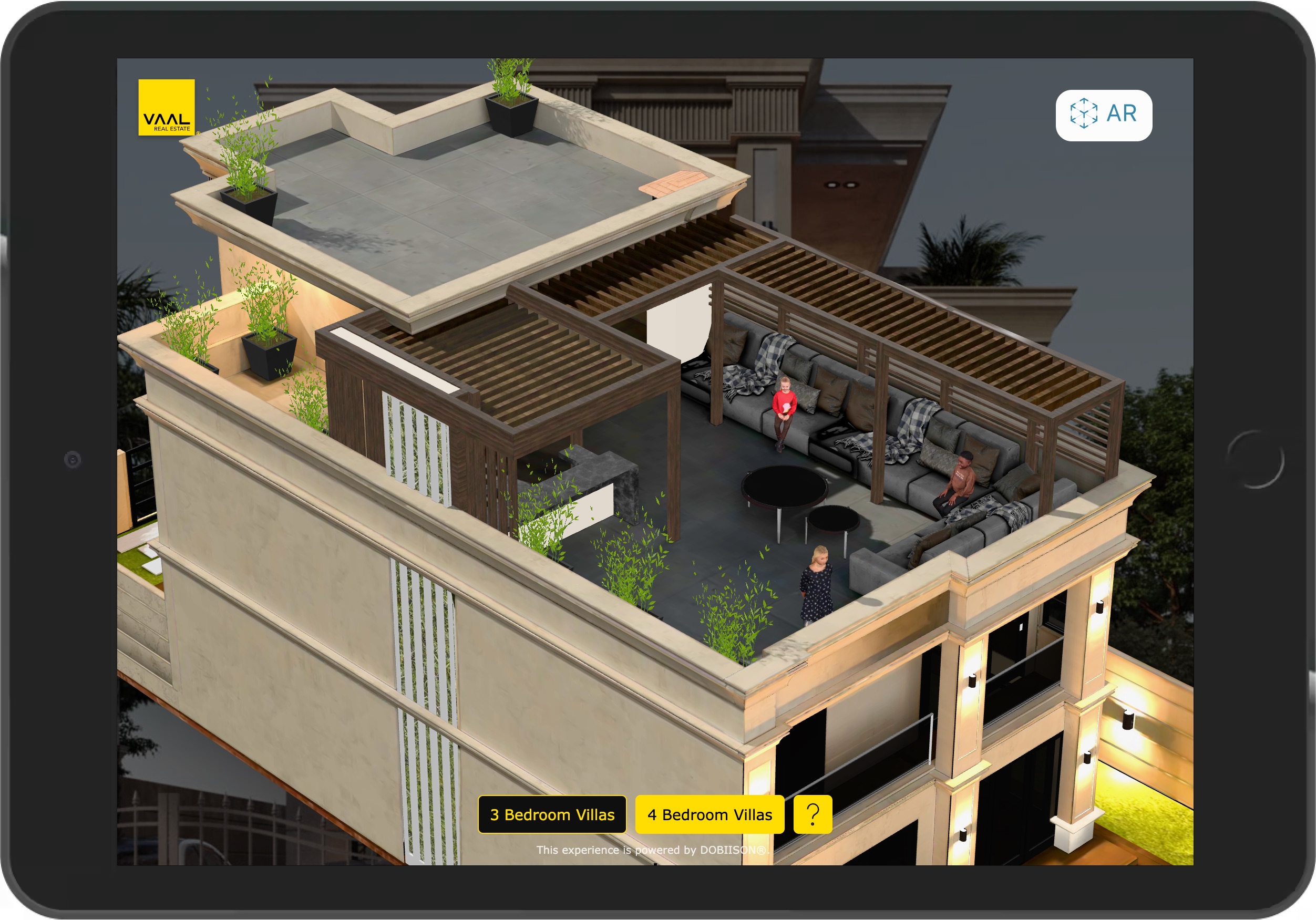
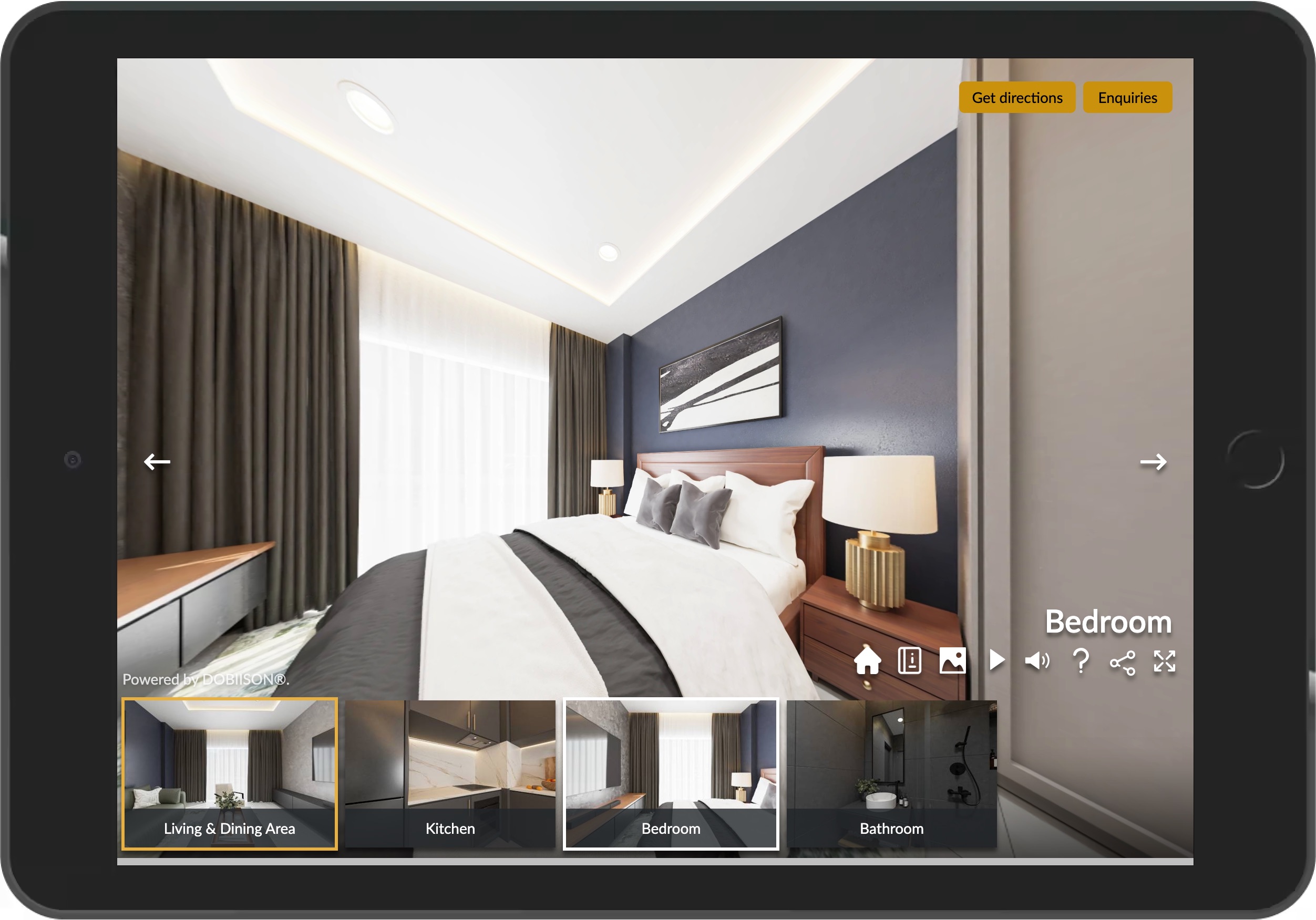
When DOBIISON created the InfinitiView experience for The Blossoms, the goal was not only to show pretty images. It was to help buyers and guests understand the space before the development was physically ready in full. At the launch event, the experience was also presented through VR headsets, giving attendees a more direct sense of being inside the property.
That kind of viewing changes the conversation.
Instead of asking buyers to imagine everything, the developer can let them explore the space, walk through it virtually, and feel closer to the final product.
VR at Launch Events Can Make the Project Feel Real
Launch events are important for off-plan developments. They bring together buyers, agents, investors, partners, media, and sales teams. But too often, the event still depends on speeches, brochures, banners, and display boards.
Those things have their place. But they do not always make the buyer feel the space.
A VR headset at a launch event gives guests something memorable to do. They can step into a unit before it is built. They can look around. They can experience the living room, bedroom, kitchen, lobby, or amenities in a more personal way.
For both The Blossoms and West Avenue, VR headset viewing added another layer to the launch experience. It gave people more than a presentation. It gave them a moment of inspection.
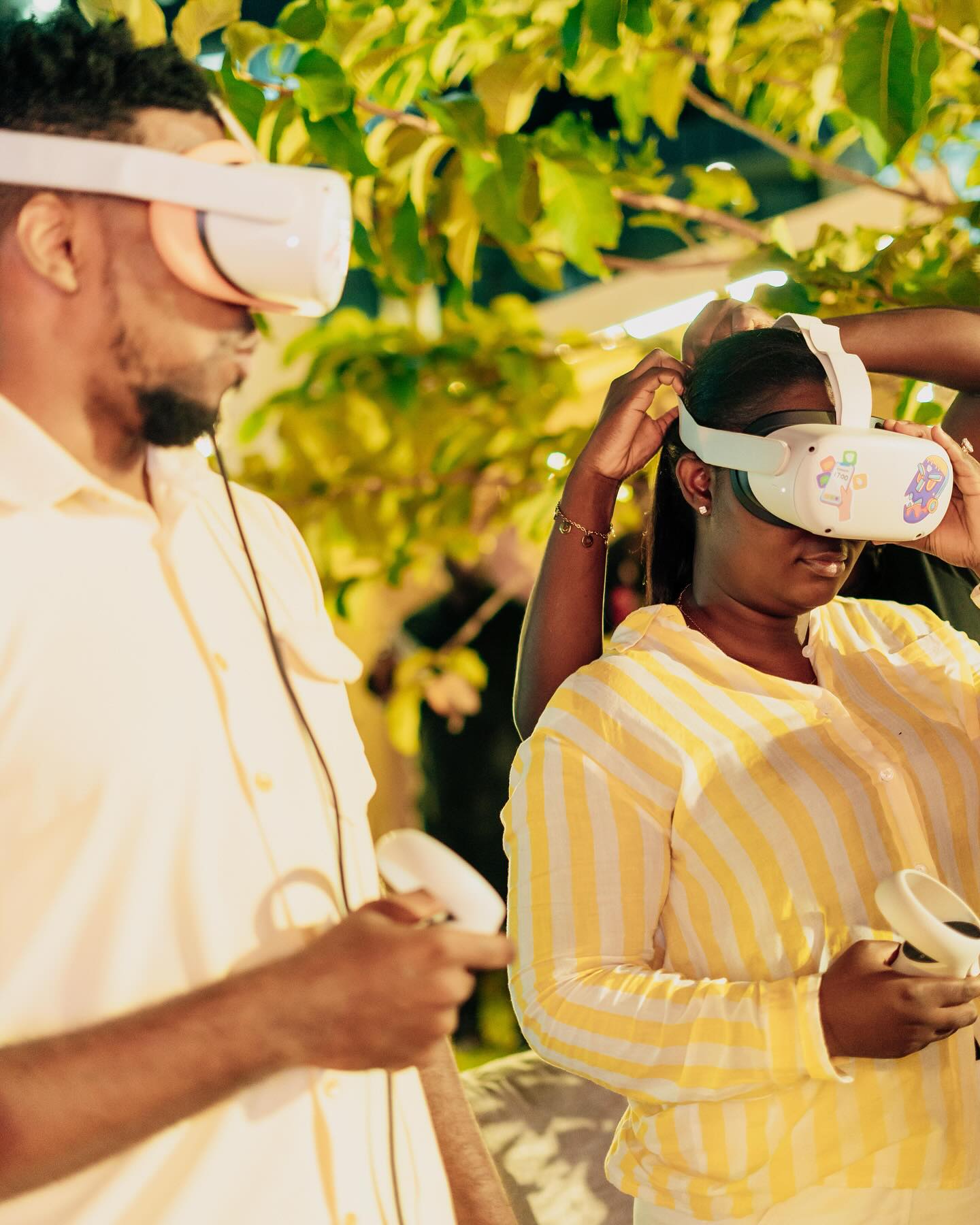
That matters because property is emotional as much as it is financial. A buyer may forget a slide in a pitch deck. They are less likely to forget the moment they stood in the middle of a future apartment through a headset and understood what was being sold.
Virtual Tours Support Sales Teams After the Event
A good launch event creates attention. But the real sales work continues after people leave the room.
This is where many off-plan campaigns lose momentum. Interested buyers go home. Diaspora prospects ask for more information. Agents need something clear to send. Sales teams repeat the same explanations again and again.
A virtual tour gives the sales team a strong follow-up asset.
After a launch, the developer can send buyers a link to revisit the project. Agents can share the same experience with prospects. Diaspora buyers can forward it to family members abroad or in Ghana. Decision-makers who missed the launch can still explore the project on their own time.
For a project like West Avenue, the virtual tour does not only work during the launch moment. It continues working afterwards as part of the sales process. It gives the buyer something to return to when they are comparing options, discussing payment plans, or deciding whether to book a physical meeting.
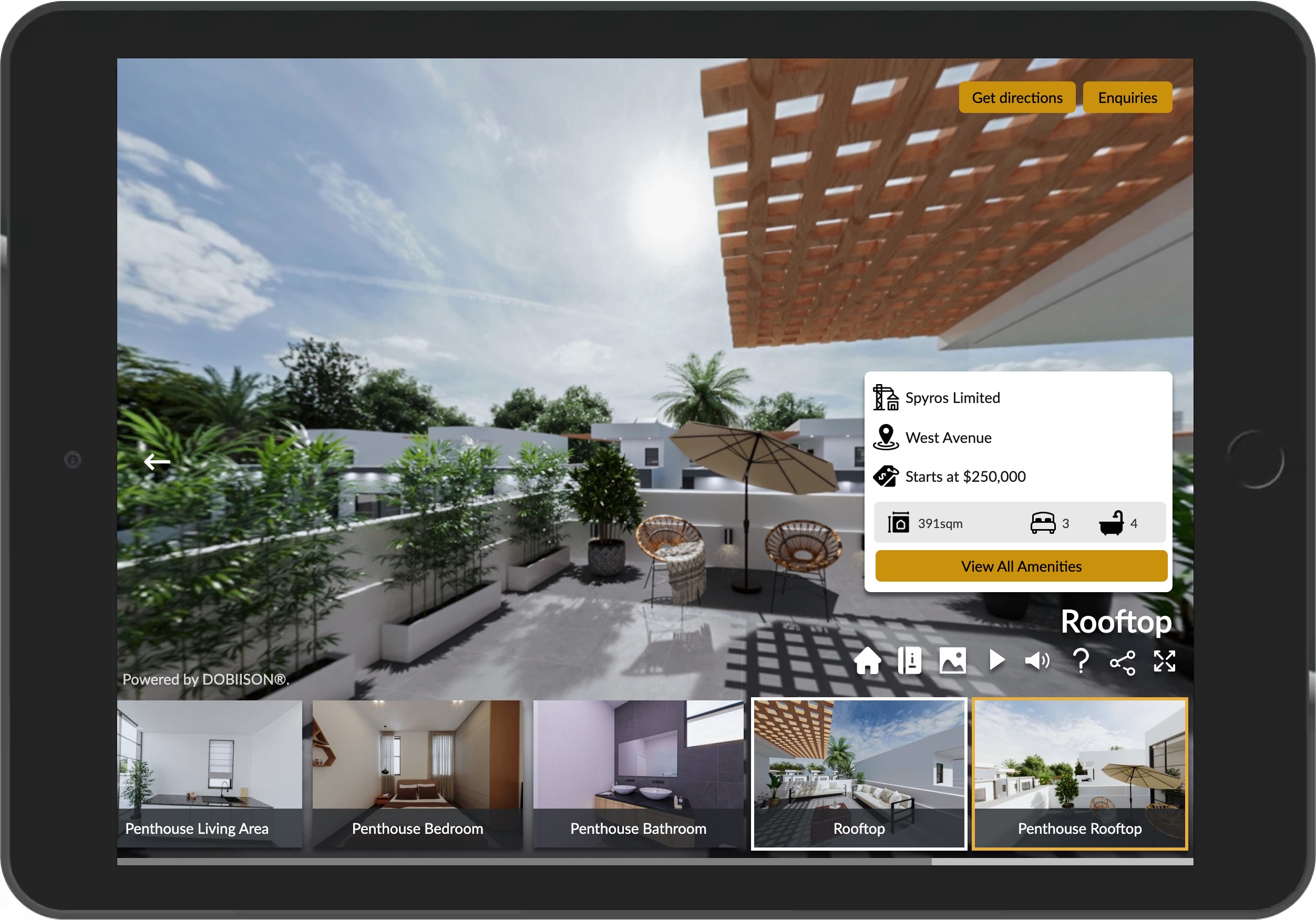
That is where the value becomes practical. The tour is not just a showcase. It becomes part of the developer’s sales infrastructure.
AR Can Help Buyers View the Property in a New Way
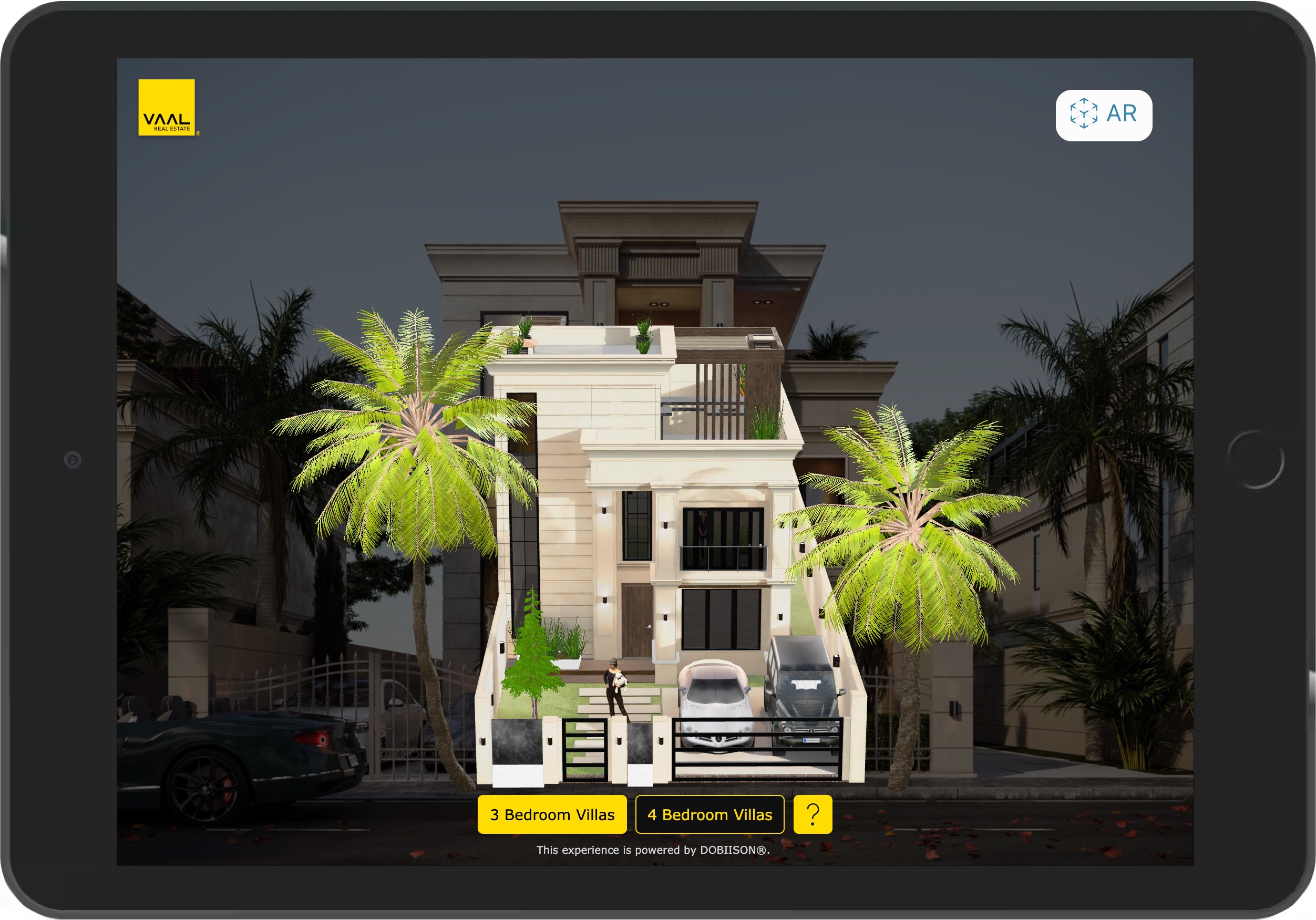
Augmented reality can also support off-plan sales, especially when buyers need to understand a building, unit, or project model in three dimensions.
With VAAL, the InfinitiView experience includes an AR view. This gives buyers another way to engage with the property beyond a flat screen. Instead of only looking at static visuals, they can interact with a digital version of the project in a way that feels more present and easier to discuss.
For developers, AR is useful when a project needs more explanation. It can help buyers understand layout, structure, form, and spatial relationships. It can also be used at sales centres, exhibitions, open days, launch events, and private buyer presentations.
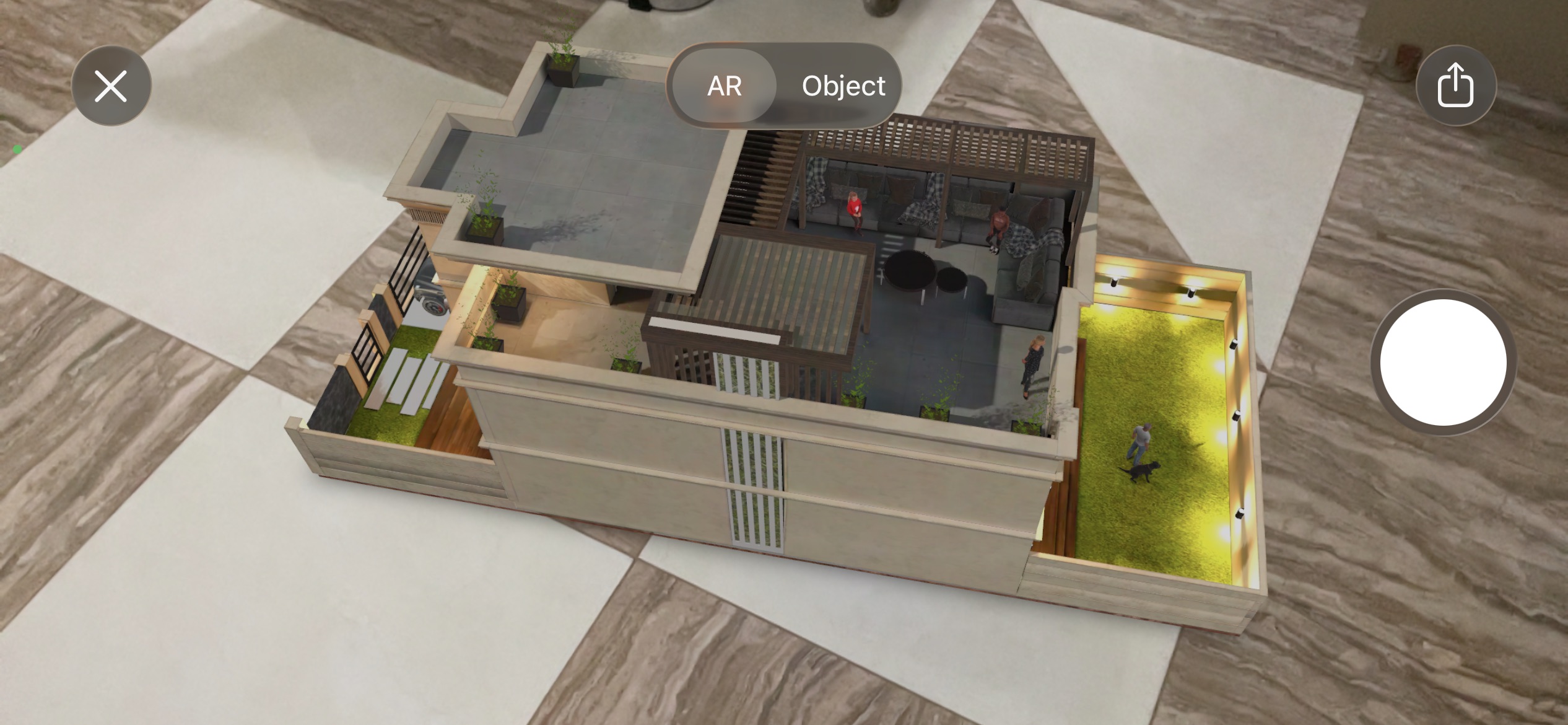
The point is not to use technology for decoration. The point is to make the property easier to understand before the buyer is standing inside the completed building.
Virtual Tours Help Developers Sell to Diaspora Buyers
Diaspora buyers are a major audience for off-plan property in Ghana. Many are looking for homes, investment apartments, retirement plans, rental assets, or future family residences.
But they are also careful.
They may have heard bad stories. They may have been disappointed before. They may be buying from London, Toronto, New York, Amsterdam, Berlin, Johannesburg, or elsewhere, with limited ability to check the site in person.
For these buyers, off-plan property requires a higher level of confidence.
A virtual tour helps the developer show more. It gives the buyer a stronger first inspection from abroad. It also helps the buyer involve family, friends, lawyers, and financial decision-makers without relying on scattered photos and long explanations.
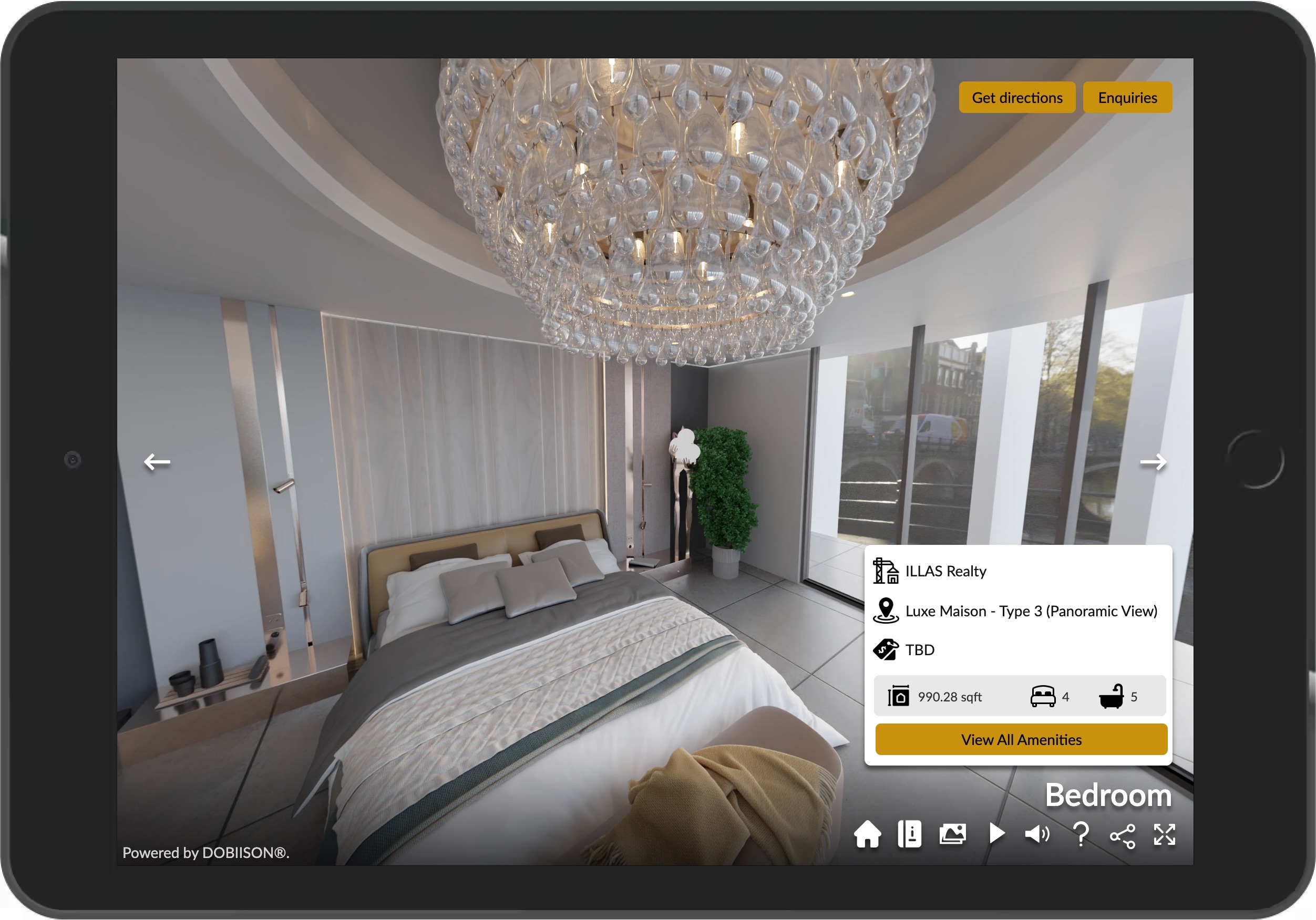
A project like Luxe Maison by ILLAS Realty becomes easier to present to remote buyers when there is a clear digital viewing experience. The buyer can spend time with the property, revisit it, ask better questions, and move into the next conversation with more context.
That saves time for both sides.
It Helps Developers Qualify Serious Leads
Not every enquiry is a serious buyer.
Some people are browsing. Some are comparing casually. Some are not ready. Some do not understand the price point, location, payment structure, or product type.
A virtual tour helps buyers qualify themselves before speaking to the sales team.
When a prospect has explored the project, looked through the virtual experience, understood the space, and still sends an enquiry, that lead is usually more informed. They are not just asking, “How much?” They are more likely to ask about unit availability, payment terms, completion timelines, documentation, mortgage options, rental potential, or inspection arrangements.
That is a better sales conversation.
For developers, this reduces wasted time. Sales teams do not have to explain the basics repeatedly. Agents have a better tool to share. Buyers come into the conversation with a clearer picture of what is being offered.
It Gives Off-Plan Projects a Longer Sales Life
Off-plan property campaigns often start with energy. There is a launch, social media push, agent outreach, brochures, renders, and maybe a few site visits.
But attention fades.
A virtual tour helps keep the project alive digitally. It can sit on the developer’s website, be shared by agents, used in paid campaigns, sent to diaspora prospects, presented at expos, opened during sales meetings, and used at investor conversations.
That makes the project easier to market beyond one event or one campaign cycle.
The buyer does not need to wait for office hours. They can inspect at night after work. They can send the link to a spouse in another country. They can compare it with other developments over the weekend. They can return to the tour when the sales team follows up.
This is especially useful for off-plan developments because the sales window can stretch over months. The more accessible the project is, the easier it is to keep buyers engaged during that period.
It Builds Confidence Around the Developer’s Brand
Off-plan buyers are not only buying a unit. They are buying the developer’s promise.
That is why presentation matters.
A developer who invests in a proper digital viewing experience sends a clear signal. It tells buyers that the project is being taken seriously. It shows that the developer understands modern buyer behaviour. It gives agents a better sales tool. It gives diaspora buyers a clearer way to inspect. It gives partners and investors something stronger to review.
This does not replace delivery. The developer still has to build well, communicate clearly, meet timelines, and honour agreements.
But the sales process becomes more credible when buyers can see more from the beginning.
What Should an Off-Plan Virtual Tour Include?
A strong off-plan virtual tour should do more than show attractive interiors.
It should help the buyer understand the full offer.
That may include the apartment or house layout, room-to-room movement, exterior views, estate entrance, amenities, parking, lobby areas, rooftop spaces, pool areas, gym, shared facilities, location context, unit types, floor plans, project information, enquiry forms, call buttons, videos, and sales contact details.
For higher-value developments, it can also include VR headset support for sales suites and launch events, AR views for interactive presentations, and analytics to help developers see how buyers are engaging with the experience.
The goal is simple: give buyers enough clarity to take the next step.
Virtual Tours Do Not Replace Salespeople
A virtual tour will not close every sale by itself.
Real estate still needs human conversation. Buyers still need reassurance, negotiation, documentation, legal checks, site visits, and relationship-building.
But a virtual tour makes the salesperson’s job easier.
It gives the buyer something clear to look at before the call. It reduces repeated explanations. It makes follow-up stronger. It helps the agent guide the buyer through the project with a shared reference. It allows the developer to keep selling even when the buyer is abroad, busy, or not ready for a physical visit.
In off-plan sales, that support is valuable.
Because the buyer is not only asking, “Can I afford this?”
They are asking, “Can I trust what I am being shown?”
Let DOBIISON Help You Sell Off-Plan Properties with More Confidence
Off-plan property sales need more than beautiful renders and hopeful conversations. Buyers want to see more before they commit. Developers need better tools to explain the space, support their agents, engage diaspora buyers, and keep serious prospects moving through the sales process.
DOBIISON can help you solve that.
Through InfinitiView, we create virtual tours, digital twins, VR property experiences, AR views, interactive project pages, enquiry tools, and sales-ready viewing experiences for real estate developers, agencies, and property owners.
Whether you are preparing for a project launch, selling apartments before completion, marketing a gated community, presenting luxury units, or targeting diaspora buyers, DOBIISON can help you make your off-plan property easier to explore, easier to understand, and easier to sell.
Contact DOBIISON to create an InfinitiView experience for your off-plan development.
Give buyers a better way to see the property before it is built.